Who Decides How Your Tax Dollars Are Spent—And How to Make Sure Your Ward Gets Its Fair Share
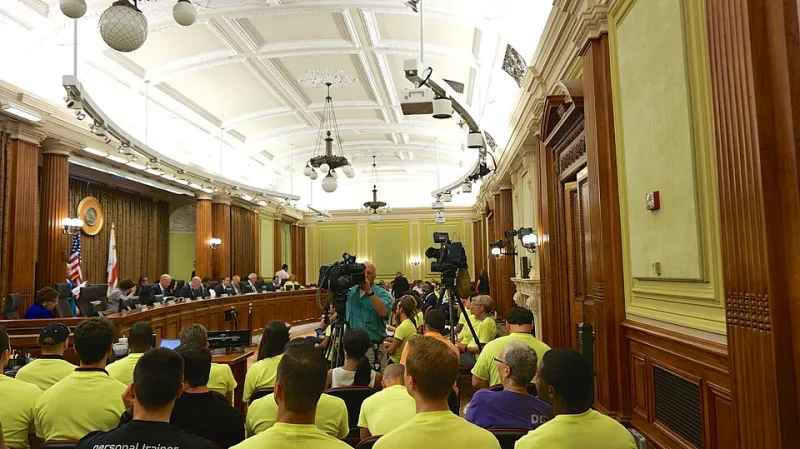
Photo: Ted Eytan, CC BY-SA 2.0, via Wikimedia Commons
Budget season in Chicago tends to generate more confusion than conversation. Dense fiscal documents, technical jargon, and a process that unfolds largely inside City Hall can make the whole enterprise feel remote—something that happens to residents rather than something they participate in. That perception is not only inaccurate; it is actively harmful to the communities that stand to benefit most from public investment.
The truth is that the municipal budget is a moral document. Every line item reflects a choice: which streets get resurfaced and which ones wait another year, which community programs receive stable funding and which ones are quietly zeroed out, which neighborhoods see new infrastructure investment and which ones are told to be patient. Those choices are made by elected officials—and elected officials respond to organized, informed constituent pressure.
This office believes that budget transparency is not a courtesy. It is a democratic obligation. What follows is a plain-language guide to how Chicago's budget works, where the leverage points are, and how you can use them.
How the City Budget Is Built: The Basics
Chicago operates on a fiscal year that runs from January 1 through December 31. The process of building the next year's budget begins in earnest in the summer, when the Mayor's Office of Budget and Management starts working with individual city departments to develop spending requests. By late September or October, the mayor presents a proposed budget to the City Council—a document that, in recent years, has run to several thousand pages.
From that point, the City Council's Finance Committee holds public hearings, and individual aldermen have the opportunity to negotiate on behalf of their wards. The full Council votes on the final budget, typically in late November, and it takes effect on January 1.
Within that framework, there are two distinct pools of funding that directly affect ward-level services:
Citywide departmental budgets cover the operating costs of agencies like the Chicago Department of Transportation, the Chicago Park District, the Chicago Public Library, and the Department of Streets and Sanitation. These budgets determine how many crews are deployed for street repairs, how many parks receive capital investment, and how many library branches maintain full operating hours.
Menu money (formally known as the Aldermanic Menu Program) allocates a set amount—historically around $1.32 million per ward per year—that aldermen can direct toward specific infrastructure projects in their ward, such as alley resurfacing, street lighting upgrades, and sidewalk repairs. This is one of the most direct mechanisms by which ward-level priorities get funded, and it is a resource this office takes seriously.
Where the Money Actually Goes: Reading the Numbers
Chicago's budget documents are publicly available at chicago.gov/budget. The full proposed budget, the budget overview, and the annual financial analysis are all accessible without any special access or registration. This office strongly encourages residents to explore these documents—and we acknowledge that they can be overwhelming.
Here is a practical starting point: look at the departmental summary pages, which provide a high-level breakdown of each agency's total appropriation, headcount, and year-over-year changes. A department that saw a 12 percent budget reduction from the prior year is almost certainly going to deliver fewer services. That reduction may not generate headlines, but it will be felt in your neighborhood.
For ward-specific data, residents can request information about how this office has allocated menu money in prior years, which projects were funded, and what remains in the current cycle. Transparency about these decisions is a commitment this office makes to every constituent.
The Case for Participatory Budgeting
This office has long supported expanding participatory budgeting—a process by which residents vote directly on how a portion of public funds are spent—precisely because it produces better outcomes than top-down allocation. When the people who live on a block are asked what their block needs, they provide answers that no spreadsheet can generate.
Several Chicago wards have implemented participatory budgeting processes for their menu money, allowing residents to submit project proposals, deliberate on competing priorities, and cast binding votes. The results have consistently reflected genuine community needs: accessibility ramps at intersections that had been overlooked for years, lighting improvements in areas with documented safety concerns, and park amenities that reflect the actual demographics of the neighborhoods they serve.
Expanding this model—and ensuring that participation is accessible to renters, non-English speakers, seniors, and others who are often excluded from civic processes—is a priority this office continues to advocate for at the Council level.
How to Make Your Voice Heard Before the Budget Is Finalized
The window between the mayor's budget proposal and the Council's final vote is narrow—typically six to eight weeks. But it is the most consequential period for constituent input, and there are concrete actions you can take.
Attend or submit written testimony for budget hearings. The Finance Committee holds public hearings during budget season, and residents are permitted to testify. Written testimony submitted in advance also becomes part of the public record. If attending in person is not feasible, a written statement submitted through this office can be incorporated into the alderman's formal comments during deliberations.
Contact this office directly with your spending priorities. Every email, phone call, and in-person visit that identifies a specific community need during budget season contributes to the alderman's advocacy posture during negotiations. If twenty constituents identify the same park as underfunded, that is a data point that carries weight in a budget meeting.
Organize with your neighbors and block clubs. Collective advocacy is more powerful than individual requests. A letter signed by fifty residents of a single block carries different weight than fifty separate emails. This office can help connect constituents with existing block clubs and neighborhood associations if you are not already engaged with them.
Track the budget after it passes. Approval is not the end of the process. Departments sometimes spend below their appropriations, delay projects, or redirect funds internally. Monitoring actual expenditures—which are reported quarterly in the city's financial disclosures—ensures that approved investments actually materialize.
Budget Transparency Is Not Optional
There is a tendency in local government to treat budget complexity as an inevitable feature rather than a solvable problem. This office rejects that framing. When residents cannot understand how their tax dollars are being spent, they cannot hold their representatives accountable. That accountability gap benefits no one except those who prefer to make consequential decisions without scrutiny.
This is why Alderman Moreno's office publishes an annual ward budget summary in plain language, hosts a pre-budget community meeting each fall to gather resident input, and maintains an open-door policy for constituents who want to review spending decisions in detail.
Your tax dollars built this city. You have every right to know where they go—and every right to insist that they go where your community needs them most. This office will continue to fight for that transparency, and for the ward investments that reflect the priorities of the people who live here.