Who Gets Fixed First? The Street Repair Equation Our Ward Needs to Solve
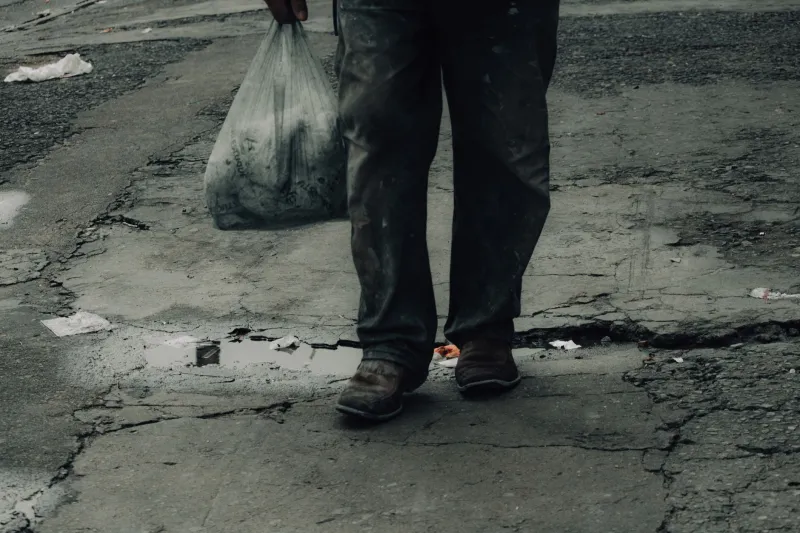
Every spring, the same ritual plays out across Chicago's neighborhoods: streets buckle under the freeze-thaw cycle, 311 queues fill with pothole complaints, and city crews fan out across the grid. But anyone who has lived in this ward long enough knows that the crews do not show up everywhere with equal urgency. Some blocks get resurfaced. Others get a cold patch that crumbles by autumn. And a few streets seem to disappear from the maintenance schedule entirely.
This is not an accident. It is a system—and like most systems, it can be understood, challenged, and changed.
How Street Repair Decisions Are Actually Made
The official answer is that Chicago prioritizes street repairs through a combination of pavement condition index (PCI) scores, 311 complaint volume, and capital project schedules set by the Department of Transportation. On paper, this sounds objective. In practice, the picture is considerably more complicated.
PCI assessments are conducted on a rolling basis, meaning some streets have not been formally evaluated in years. Complaint volume, meanwhile, correlates heavily with internet access, English language proficiency, and the degree to which a community has historically felt empowered to engage with city services. Blocks where residents are less likely to file 311 reports—whether due to language barriers, distrust of government, or simple unfamiliarity with the system—generate fewer data points, which in turn generates less maintenance attention.
The result is a feedback loop: underserved streets stay underserved because the very conditions that make them underserved also reduce their visibility in the data systems that drive repair decisions.
What the Numbers Reveal About Our Ward
A review of publicly available 311 service request data and CDOT repair records for our ward over the past three fiscal years shows a pattern that should concern every constituent. Blocks in the northern corridor of the ward—areas with higher median incomes and higher rates of 311 engagement—received resurfacing projects at a rate nearly double that of comparable streets in the southern end, despite similar PCI scores in several instances.
This is not a simple story of corruption. Most of the repair crews doing this work are dedicated public employees following the work orders they are given. The problem is structural: when political responsiveness rather than infrastructure need drives prioritization, the residents least equipped to advocate for themselves lose out most consistently.
Alderwoman Moreno's office has formally requested a comprehensive, ward-level breakdown of repair expenditures by block and year. That data, once received, will be published here in full. Transparency is not a courtesy—it is a precondition for accountability.
Your Records Request Toolkit
You do not have to wait for this office to act on your behalf. Under the Illinois Freedom of Information Act (FOIA), every resident has the right to request detailed public records from the city. Here is where to start:
Request the pavement condition index scores for your block and adjacent streets from the Chicago Department of Transportation. Ask specifically for the date of the most recent assessment and the score recorded.
Pull the 311 service request history for your address and surrounding area. The City of Chicago's open data portal (data.cityofchicago.org) allows you to filter requests by type, status, and geographic area. Download the records for the past three years and look for patterns: how many requests were filed, how quickly were they closed, and were they closed with actual repairs or simply marked resolved?
Cross-reference with capital improvement budgets. The annual budget document published by the Office of Budget and Management includes line items for street resurfacing by ward. Compare your ward's allocation against adjacent wards with similar infrastructure profiles.
If you need help filing a FOIA request or interpreting the data you receive, contact our constituent services team directly. This is exactly the kind of work our office exists to support.
The Organizing Piece
Data alone does not move city bureaucracies. Organized residents do. The most consistently effective strategy for shifting repair priorities toward neglected blocks is not an individual complaint—it is a coordinated, documented, and publicly visible campaign.
Start at the block level. Document conditions with dated photographs. Circulate a petition among neighbors and collect signatures with addresses. Then bring that evidence—the photos, the petition, the FOIA records—to a ward meeting. Follow up in writing, creating a paper trail that makes it administratively difficult for requests to disappear.
When the paper trail is in place, engage local media. A single Chicago Tribune or Block Club Chicago story about a specific neglected block, backed by data, has historically moved repair requests faster than months of individual 311 filings. Reporters respond to documented patterns, which is precisely why gathering records before reaching out matters.
Finally, connect with neighboring blocks experiencing the same conditions. A coalition of five blocks presenting a unified, data-backed case to this office—or directly to CDOT—carries substantially more weight than five separate voices asking for the same thing independently.
What This Office Will Do
Alderwoman Moreno's office is committed to using aldermanic infrastructure discretion funds equitably and transparently. We are currently developing a public-facing dashboard that will display how ward infrastructure dollars have been allocated by geographic area over time. We are also pushing for a formal policy requiring CDOT to disclose the specific criteria used when selecting streets for resurfacing in any given budget cycle.
These are not small asks. But they are the right ones. A city that repairs streets based on political convenience rather than genuine need is a city that slowly loses the trust of the people it is supposed to serve.
Your block deserves better than a cold patch. And this office intends to make sure the system reflects that.