The True Price of Neglect: How Crumbling Infrastructure Quietly Drains Your Family's Budget
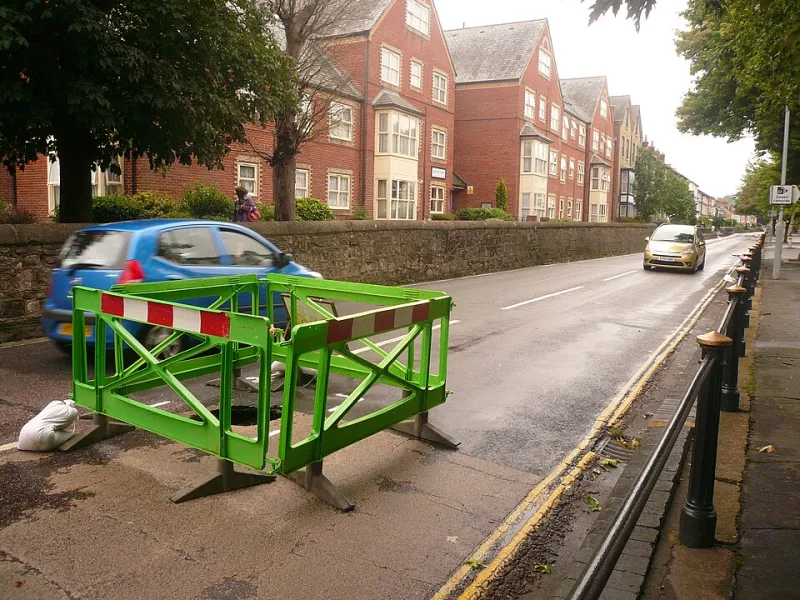
Photo: Editor5807, CC BY 3.0, via Wikimedia Commons
The pothole on your street is an inconvenience. It is also a transfer of wealth—from your pocket to your mechanic's.
That framing may feel dramatic, but the arithmetic is straightforward. When public infrastructure deteriorates because of deferred maintenance and inadequate investment, the costs do not simply vanish. They migrate. They shift from municipal budgets—where they are visible, debatable, and subject to democratic oversight—into the private accounts of residents who absorb them invisibly, one blown tire and one insurance premium increase at a time.
Understanding that migration is essential to understanding why infrastructure investment is not a luxury or a partisan preference. It is, quite literally, a matter of personal finance.
The Vehicle Damage Tax Nobody Voted For
The American Automobile Association estimates that U.S. drivers collectively pay more than $26 billion annually in vehicle damage attributable to poor road conditions. On a per-driver basis in cities with significant infrastructure deficits, that figure frequently exceeds $500 per year. In some metropolitan markets, the number climbs considerably higher.
The damage compounds in ways that are not always immediately apparent. A pothole strike that misaligns a vehicle's suspension does not announce itself with a dramatic breakdown. It manifests as uneven tire wear over six months, a steering component that fails eighteen months later, and fuel efficiency that quietly degrades because the vehicle is no longer tracking correctly. By the time a resident connects the repair bill to the road condition, the original cause is long forgotten—and the municipality has escaped accountability.
For lower-income households, the impact is disproportionate. A family driving an older vehicle with less structural resilience, and carrying less financial cushion to absorb unexpected repair costs, is hit harder by infrastructure neglect than a household with newer equipment and disposable savings. Poor roads are, in this sense, a regressive tax.
Insurance Premiums and the Ripple Effect
Vehicle damage claims drive insurance costs upward—not just for the individuals filing them, but for entire rating territories. Insurers assess risk geographically. When claims frequency rises in a zip code or neighborhood, premiums across that area adjust accordingly. Residents who never file a claim absorb a cost increase generated by road conditions they did not create and cannot individually control.
The same dynamic applies to property insurance in areas prone to flooding exacerbated by deteriorating stormwater infrastructure. Aging combined sewer systems—a challenge that several Chicago-area communities continue to grapple with—contribute to basement flooding events that generate homeowner claims, elevate neighborhood risk profiles, and drive up premiums for everyone on the block.
This is not a theoretical projection. It is the documented, actuarial consequence of deferred public investment.
What Neglect Does to Property Values
Real estate markets are efficient processors of neighborhood quality signals. Buyers and their agents evaluate streetscapes, sidewalk conditions, lighting, and the general state of public infrastructure when pricing offers. Academic research consistently finds that proximity to visibly deteriorated public infrastructure—broken pavement, failing streetlights, eroded parkways—correlates with measurable suppression of property values.
A 2019 analysis by the Urban Land Institute found that neighborhoods with concentrated infrastructure deficiencies experienced property value growth rates meaningfully below comparable neighborhoods with maintained public assets, even after controlling for other variables. Over a decade, that differential compounds into tens of thousands of dollars in foregone home equity for individual owners.
For the majority of middle-class American families, home equity is the primary vehicle of intergenerational wealth accumulation. Infrastructure neglect does not merely inconvenience homeowners; it erodes the foundation of their financial security.
Small Businesses Bear a Disproportionate Burden
The economic consequences extend beyond households. Small businesses—the commercial backbone of most urban wards—absorb infrastructure costs through multiple channels simultaneously.
Delivery and service vehicles operating on deteriorated streets face the same repair and fuel efficiency penalties as personal vehicles, but at commercial scale. A small contractor running two trucks through a ward with consistently poor road conditions may spend several thousand dollars more annually in maintenance than a competitor operating in a better-maintained market—a structural disadvantage that has nothing to do with business acumen.
Beyond direct vehicle costs, streetscape quality influences foot traffic and customer perception. Retail corridors with cracked sidewalks, inadequate lighting, and visible disrepair signal disinvestment to potential customers. The decision to patronize a neighborhood business is partly a comfort-and-safety calculation, and deteriorated public infrastructure shifts that calculation in the wrong direction.
The Deferred Maintenance Trap
Perhaps the most insidious aspect of infrastructure neglect is the way it accelerates its own cost. Engineers and public works professionals operate with a principle sometimes called the "1-4-10 rule": for every dollar of preventive maintenance deferred, the eventual remediation cost grows to four dollars in corrective repair, and to ten dollars in full reconstruction if the asset is allowed to fail completely.
A pothole that could have been filled for a few hundred dollars in routine maintenance becomes a full lane reconstruction project costing tens of thousands once the subbase deteriorates. A water main that could have been relined for a fraction of replacement cost eventually fails catastrophically, requiring emergency excavation that disrupts businesses, displaces traffic, and costs multiples of what proactive investment would have required.
This is why budget decisions that appear fiscally conservative—deferring maintenance to preserve short-term fund balances—are, in economic terms, profoundly costly. They shift expenditures forward in time and multiply them in the process.
The Policy Argument for Sustained Investment
This office has consistently advocated for infrastructure budget allocations that reflect the full lifecycle cost of public assets, not merely the immediate capital outlay. The case is not sentimental. It is financial.
When we fight for adequate funding in the city's capital improvement plan, or push back against proposed cuts to the Department of Transportation's maintenance budget, we are making an argument that residents already understand intuitively: paying now is cheaper than paying later, and the difference comes out of residents' pockets either way.
The question before every municipal budget cycle is not whether infrastructure will be paid for. It is who will pay, and when. Sustained public investment means the cost is shared broadly, distributed equitably, and managed efficiently. Deferred maintenance means the cost is borne privately, concentrated among those least able to absorb it, and multiplied by the passage of time.
That is not a trade-off this office is willing to accept quietly—and we do not believe our constituents should accept it either.