Cracked Pavement, Uneven Chances: What the Data Actually Reveals About Street Repair Decisions in Our Ward
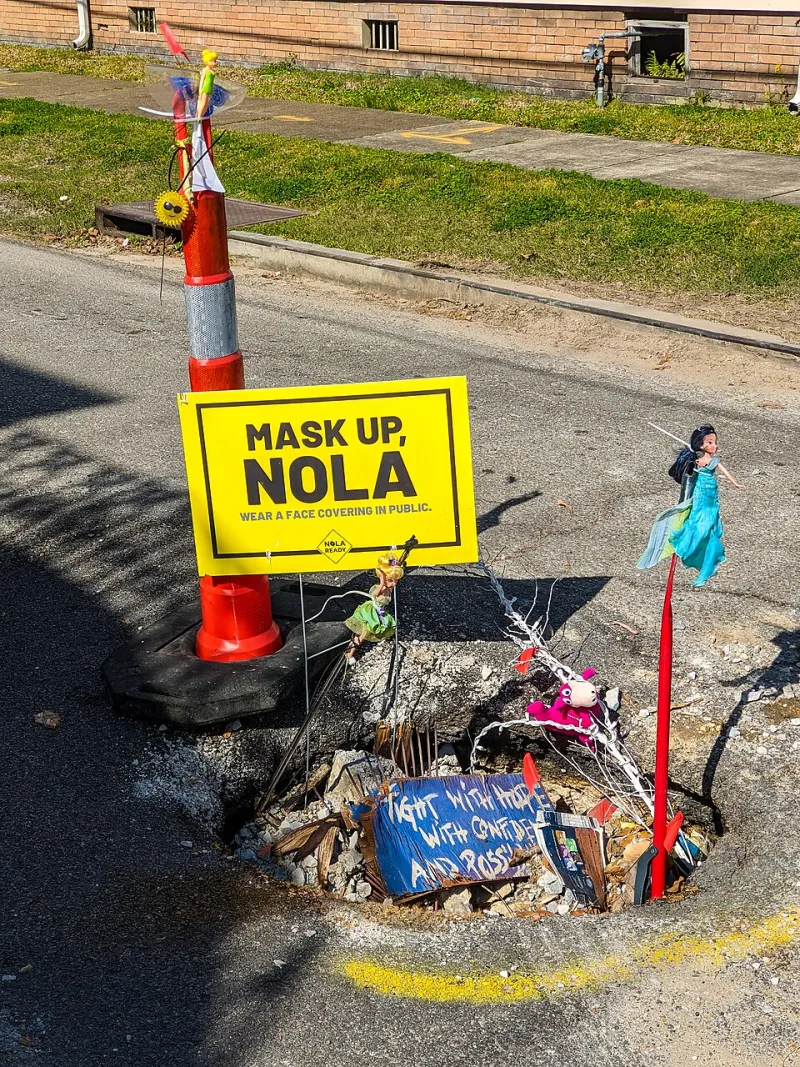
Photo: Bart Everson, CC BY 2.0, via Wikimedia Commons
The Question Every Resident Eventually Asks
At some point, nearly every constituent who contacts this office arrives at the same frustrated observation: a street two blocks away received a fresh layer of asphalt, while their own block—riddled with potholes and cracked curbs—has been waiting for attention for years. The explanation they receive, if they receive one at all, is typically vague. "It's in the queue." "Engineering assessed it." "Funding is limited."
Those answers are not wrong, exactly. But they are incomplete in ways that matter enormously to the families whose cars sustain daily damage, whose elderly neighbors struggle over uneven pavement, and whose property values quietly erode while they wait.
This office decided to stop accepting incomplete answers. Over the past several months, we submitted a series of Freedom of Information Act requests to the Department of Transportation and the Bureau of Streets and Sanitation, seeking raw data on street condition scores, repair scheduling timelines, and the criteria used to rank maintenance priorities. What those records reveal is a system that is partially transparent, occasionally equitable, and—in ways that deserve public scrutiny—susceptible to influences that have nothing to do with pavement conditions.
How the Official System Is Supposed to Work
On paper, the city's street prioritization framework is methodical. Streets are assigned a Pavement Condition Index, or PCI, a numeric score derived from periodic inspections that assess surface distress, cracking, rutting, and structural integrity. Scores range from zero to one hundred, with lower numbers indicating greater deterioration. Streets falling below a defined threshold are theoretically elevated into the maintenance pipeline.
The system also incorporates traffic volume data. Arterial roads carrying thousands of vehicles per day are weighted more heavily than residential side streets, on the logic that high-volume corridors generate broader public impact when degraded. Utility conflict schedules—meaning coordination with water, gas, and electric infrastructure projects—add another layer of complexity, since repaving a street before an underground utility replacement would mean tearing up fresh asphalt within a year.
Taken together, these criteria represent a reasonable framework. The problem, as our review of the data suggests, is the distance between how the framework is described and how it is applied.
What the FOIA Records Actually Show
When this office cross-referenced PCI scores against actual repair completion dates across our ward, several patterns emerged that are difficult to explain on technical grounds alone.
First, a number of streets with PCI scores in the low-to-mid range—meaning moderate deterioration, not emergency conditions—appeared in completed repair logs ahead of streets with significantly worse scores. In several cases, the repaved streets had received attention within two years of their most recent resurfacing, while adjacent blocks with demonstrably worse conditions remained unscheduled.
Second, the inspection data itself showed irregular gaps. Certain blocks had not received a formal PCI assessment in over five years, which effectively removes them from prioritization consideration regardless of their actual condition. You cannot score a street you have not inspected. And if inspections are not distributed equitably across neighborhoods, the entire ranking system becomes distorted at its foundation.
Third, when we mapped repair completions against ward political geography—precinct boundaries, community meeting attendance records, and aldermanic service request logs—a correlation emerged that, while not conclusive, is worth naming plainly: blocks with documented histories of organized constituent engagement showed modestly higher rates of repair completion, independent of their PCI scores.
This does not mean that advocacy guarantees results, or that quieter blocks are being deliberately neglected. It does mean that the system is not purely algorithmic, and that residents who understand how to apply pressure—how to file formal requests, attend public meetings, and generate documented records—may be receiving a structural advantage over neighbors who lack that knowledge or capacity.
The Equity Problem Hiding Inside the Technical Framework
This finding has a troubling dimension that goes beyond individual fairness. The neighborhoods in our ward with the lowest rates of constituent service engagement are, in many cases, the same neighborhoods with the highest proportions of working-class families, non-English-speaking households, and residents with limited time to navigate bureaucratic processes. If the system functionally rewards those who engage most aggressively with city government, it risks compounding existing inequities rather than correcting them.
Progressive governance requires more than procedural neutrality. A system that is technically open to everyone but practically accessible only to those with time, language fluency, and institutional knowledge is not genuinely equitable. The criteria for street repair should be visible, consistently applied, and capable of standing on their own merits—without requiring residents to become amateur lobbyists simply to receive basic municipal services.
This office has raised these concerns directly with the Department of Transportation and will continue to do so. We are also working to ensure that community liaisons in every precinct of the ward are actively identifying blocks with deteriorating conditions and submitting formal inspection requests on residents' behalf, so that the advocacy gap does not translate into a repair gap.
What You Can Do Right Now
While systemic reform moves at institutional speed, there are concrete steps residents can take today to improve their block's standing in the maintenance pipeline.
Request a formal PCI inspection. If your street has not been formally assessed recently, file a written request through 311 and copy this office. A documented inspection request creates a paper trail and triggers the assessment process.
Document conditions thoroughly. Photographs with timestamps, measurements of pothole dimensions, and records of vehicle damage are all useful. The more specific your documentation, the harder it is for a request to be dismissed as anecdotal.
File through multiple channels simultaneously. A 311 request, a direct inquiry to this office, and a written communication to the Department of Transportation submitted at the same time creates redundancy that makes it more difficult for any single channel to let the matter go unaddressed.
Connect with your neighbors. A request submitted by a single resident carries less institutional weight than a coordinated submission from a dozen households on the same block. Collective documentation is not just more persuasive—it is more difficult to lose in the system.
Ask for written explanations. If your street is assessed and still not scheduled for repair, request a written explanation of the prioritization decision. You are entitled to that information, and requiring city staff to articulate their reasoning in writing introduces a layer of accountability that verbal responses do not.
The Standard We Are Holding This Process To
Public infrastructure is not a favor. It is a baseline obligation that city government owes to every resident, regardless of how loudly they advocate or how politically connected their block may be. The data this office has reviewed suggests that the current system falls short of that standard in ways that are measurable and correctable.
We are committed to continuing this investigation, publishing updates as additional records are processed, and using every available lever to ensure that repair decisions in this ward reflect genuine need rather than political convenience. Residents should expect nothing less—and this office will settle for nothing less on their behalf.