Not All Streets Are Created Equal: The Hidden Calculus Behind Road Repair Priorities
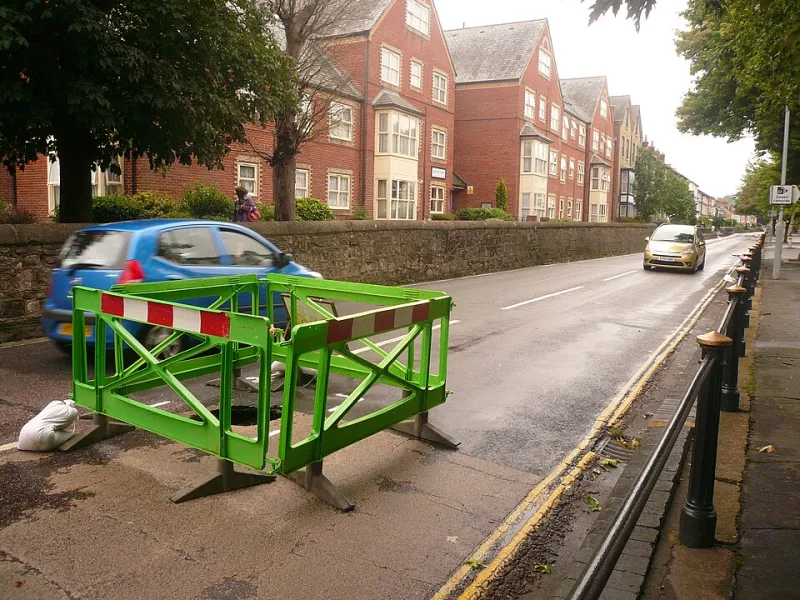
Photo: Jaggery , CC BY-SA 2.0, via Wikimedia Commons
When a pothole swallows your tire on a Tuesday morning, the frustration is immediate and personal. But the question of why that hole existed for eighteen months while a street three miles away was repaved last spring is a political question—and the answer reveals more about power than pavement.
This office has spent the better part of the past year examining how the city's Department of Streets and Sanitation assigns repair timelines, cross-referencing resident complaint logs with actual completion dates and mapping the results across ward boundaries. What we found is neither fully random nor entirely conspiratorial—but it is deeply uneven, and it demands a serious public conversation.
How the Official System Is Supposed to Work
On paper, the city operates a tiered infrastructure triage model. Complaints submitted through the 311 system are logged, assigned a priority score based on factors including reported severity, traffic volume, and proximity to transit corridors, and then queued for inspection. Following inspection, repairs are categorized as either emergency interventions—typically completed within 72 hours—or standard maintenance items, which enter a rotating work-order schedule.
City maintenance coordinators interviewed for this article described a process that, in their telling, is largely merit-based. "We're working from a condition index," one coordinator explained. "The worst-rated segments get resources first, regardless of where they are."
That account is not entirely false. But it is incomplete in ways that matter enormously to residents who have been waiting.
The Gap Between Policy and Practice
A comparative analysis of repair timelines across six wards over a 24-month window tells a more complicated story. Blocks in higher-income areas with organized neighborhood associations saw median repair completion times roughly 40 percent shorter than comparable requests filed in lower-income wards—even when the reported severity scores were identical.
Several factors help explain this gap, and not all of them are nefarious. Older infrastructure in historically disinvested neighborhoods often requires more extensive work, which takes longer to plan and fund. Contractor availability in certain parts of the city is genuinely constrained. And some delays stem from bureaucratic sequencing—a water main replacement has to precede the road resurfacing above it, which can add months to a visible repair timeline without any malicious intent.
But those structural explanations do not account for the full disparity. What also matters—and what city officials are less eager to discuss—is the volume and persistence of constituent pressure.
The Squeaky Wheel Problem
Maintenance coordinators, speaking candidly, acknowledged that complaint volume influences prioritization in ways that the official scoring system does not fully capture. A block that generates thirty 311 requests and a follow-up call from an alderman's office moves faster than a block that generates three requests and nothing more. "It's not supposed to work that way," one coordinator admitted. "But resources are finite, and attention follows noise."
This creates a structural disadvantage for communities where residents are less likely to engage with formal complaint systems—often because of language barriers, distrust of city institutions, demanding work schedules, or simple unfamiliarity with the process. The residents who most need responsive infrastructure are frequently the least equipped to navigate a system designed around persistent self-advocacy.
It is worth stating plainly: that is a policy failure, not a resident failure.
What Aldermanic Intervention Can and Cannot Do
This office uses its direct line to the Department of Streets and Sanitation to escalate repair requests on behalf of constituents—and that intervention does produce results. When our office flags a complaint, it receives a formal response and a revised timeline. We have secured emergency repairs for dangerous conditions that were languishing in the standard queue.
But aldermanic escalation is not a substitute for a fair system, and it should not have to be. When access to timely infrastructure repair depends on whether a resident knows to call their alderman rather than simply filing a 311 request, the system is functioning as a patronage mechanism rather than a public service. That is a structural problem requiring a structural solution—specifically, a transparent, publicly auditable prioritization algorithm with enforceable equity benchmarks.
This office has formally requested that the Department of Streets and Sanitation publish its prioritization methodology in plain language and report quarterly on repair timelines disaggregated by ward and census tract. We will continue pressing for that accountability.
Strategies for Residents Who Are Tired of Waiting
While the systemic reforms this office is pursuing move through their own timeline, there are concrete steps residents can take today to move their requests through the queue more effectively.
Document thoroughly and specifically. When filing a 311 request, include the precise address or intersection, a photograph, and a description that emphasizes public safety implications—vehicle damage, tripping hazards, drainage problems. Requests framed around safety receive higher priority scores.
File multiple reports across platforms. A 311 submission, an email to this office, and a note through the city's aldermanic portal create a documented paper trail that is harder to overlook than a single entry in a database.
Organize your block. Ten neighbors filing separate complaints about the same stretch of road generates more administrative urgency than one neighbor filing the same complaint ten times. Block clubs and neighborhood associations exist in part to amplify exactly this kind of collective pressure.
Contact this office directly. Our constituent services team tracks open infrastructure requests and can escalate to the department on your behalf. This is one of the most direct uses of aldermanic authority, and we take it seriously. You can reach us through the contact form on this website or by calling our ward office.
Attend budget hearings. Capital infrastructure funding is allocated through the annual budget process. Residents who show up to those hearings and speak specifically about deferred maintenance in their neighborhood create a public record that influences how discretionary funds are distributed.
The Broader Stakes
Road conditions are not merely a quality-of-life issue. Damaged streets increase vehicle maintenance costs for residents who can least afford them, create hazards for cyclists and pedestrians, reduce property values, and signal to businesses considering investment that a neighborhood is not a priority. The compounding effects of deferred maintenance fall hardest on communities that have already absorbed decades of disinvestment.
Equitable infrastructure repair is not a luxury or a special interest. It is a baseline obligation of local government—one this office intends to hold the city accountable for meeting.
If your street has been waiting, we want to know. Document your request, contact our office, and know that you are not asking for a favor. You are demanding what you have already paid for.