The Honest Guide to Aldermanic Power: What This Office Can Deliver, What It Cannot, and Why the Distinction Matters
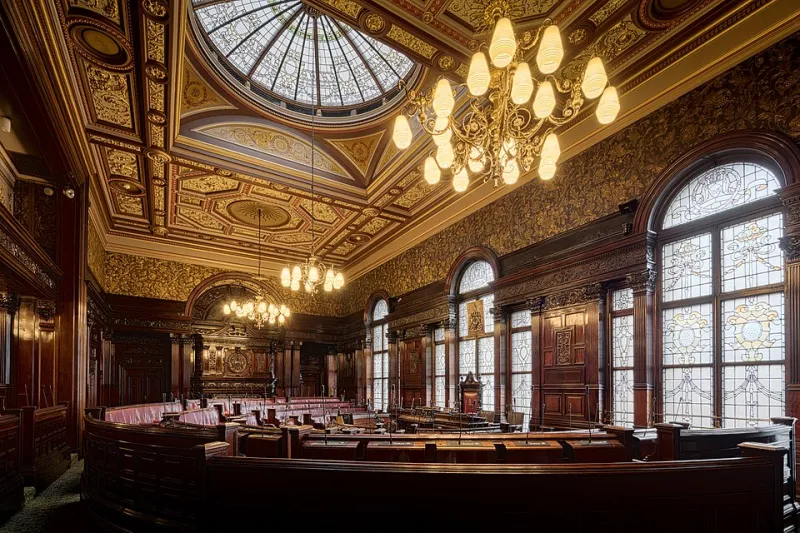
Photo: Michael D Beckwith, CC0, via Wikimedia Commons
Political transparency requires a willingness to tell constituents things that are not always convenient to say. One of the most important of those things is this: your alderman cannot fix everything. Not because of a lack of effort or commitment, but because local government operates within a layered system of authority — municipal, county, state, and federal — and the alderman's jurisdiction occupies a specific and bounded tier within that structure.
Understanding those boundaries is not a reason for cynicism. It is, in fact, the foundation of effective civic engagement. When residents direct their energy toward the right office at the right level of government, they are far more likely to see results. This guide is an attempt to provide exactly that clarity.
What an Alderman Actually Is
In Chicago, an alderman — formally a member of the City Council — is an elected representative serving one of the city's 50 wards. Each ward contains roughly 55,000 residents. The alderman serves a four-year term, votes on city ordinances and the municipal budget, and operates a ward office that provides constituent services.
The dual nature of that role is important to understand. An alderman is simultaneously a legislator — voting on citywide policy — and a constituent services provider — helping individual residents navigate city systems. These two functions require different skills and operate through different mechanisms, and residents are best served by knowing which function applies to their concern.
What This Office Can Do for You Directly
The constituent services function of an aldermanic office is broader than most residents realize. Here is a concrete accounting of areas where this office can intervene, advocate, and produce results:
Infrastructure and Public Works Our office maintains direct liaisons with the Chicago Department of Transportation, the Department of Water Management, and the Bureau of Streets and Sanitation. When a resident's 311 request has stalled, we can escalate it through departmental channels that are not accessible to the general public. We can also flag infrastructure issues for inclusion in the ward's capital improvement planning.
Zoning and Land Use Aldermen hold significant influence over zoning decisions within their ward. Under a longstanding City Council norm known as aldermanic prerogative, proposed zoning changes in a ward are typically deferred to the local alderman's position. This means our office has genuine leverage over development proposals, variance requests, and land-use disputes that affect your neighborhood's character and density.
Permits and Licensing While the Department of Buildings issues permits and the Department of Business Affairs and Consumer Protection manages business licenses, our office can facilitate communication, flag delays, and in some cases advocate for expedited review when a constituent's application has been caught in a backlog.
City Agency Accountability If a city department has failed to respond to a legitimate complaint, mishandled a service request, or treated a constituent improperly, our office can formally inquire on your behalf, request documentation, and — where warranted — refer the matter to the city's Office of Inspector General.
Community Events and Public Space Our office coordinates with the Chicago Park District and the Department of Cultural Affairs on ward-level programming, public space improvements, and community event permitting.
What Requires the Full City Council
Some of the issues residents bring to our office cannot be resolved by a single alderman acting alone. They require majority votes of the 50-member City Council, mayoral approval, or both. These include:
- Citywide budget allocations, including decisions about how much funding is directed to public safety, public health, affordable housing, and infrastructure across all 50 wards
- Changes to municipal ordinances, such as tenant protection laws, minimum wage standards, or environmental regulations
- Tax increment financing (TIF) district creation or dissolution, which affects how property tax revenue is captured and spent in specific geographic areas
- Major development agreements involving city land, tax incentives, or public financing
In these areas, our role is to vote in ways that reflect the ward's interests and to build coalitions with colleagues who share our priorities. Your voice matters here too — but the mechanism for influence is advocacy directed at the full Council, not requests directed solely at this office.
What Falls Outside City Government Entirely
This is perhaps the most important section of this guide, because misdirected complaints are among the most common sources of constituent frustration.
State-Jurisdiction Issues Illinois state government — not the City of Chicago — controls funding and policy for public schools through the Illinois State Board of Education, Medicaid and public health insurance programs, state highways and expressways (which are maintained by IDOT, not CDOT), and criminal sentencing law. Concerns about these issues should be directed to your State Representative and State Senator in Springfield.
Federal Issues Immigration enforcement, Social Security and Medicare, federal housing assistance programs such as Section 8 vouchers, and U.S. Postal Service operations fall entirely within federal jurisdiction. Your U.S. Representative and U.S. Senators are the appropriate contacts for these matters.
Private Disputes Disputes between private parties — landlord-tenant conflicts that do not involve city housing code violations, neighbor disagreements over property lines, or complaints about private businesses — generally fall outside the scope of government intervention and may require legal counsel or mediation services.
Why This Transparency Serves You
Some elected officials prefer to leave the boundaries of their authority vague. Vagueness creates the impression of limitless power and allows credit to be claimed for outcomes that were never truly within the official's control. This office takes a different view.
When you understand what we can do, you can hold us accountable for doing it. When you understand what we cannot do, you can direct your energy toward the officials and institutions that are actually responsible. That is not a limitation on civic power — it is the precondition for exercising it effectively.
Our door is open. Bring us the problems that fall within this office's reach, and we will work them with everything we have. For the problems that require a different level of government, we will help you identify the right contact and, where appropriate, add our voice to yours in pushing for a response.
That is the honest scope of what an alderman's office can offer. We believe it is enough to make a genuine difference — and we intend to prove it.