Approved Before You Knew It Existed: How Zoning Variances Slip Through—And How Residents Can Fight Back
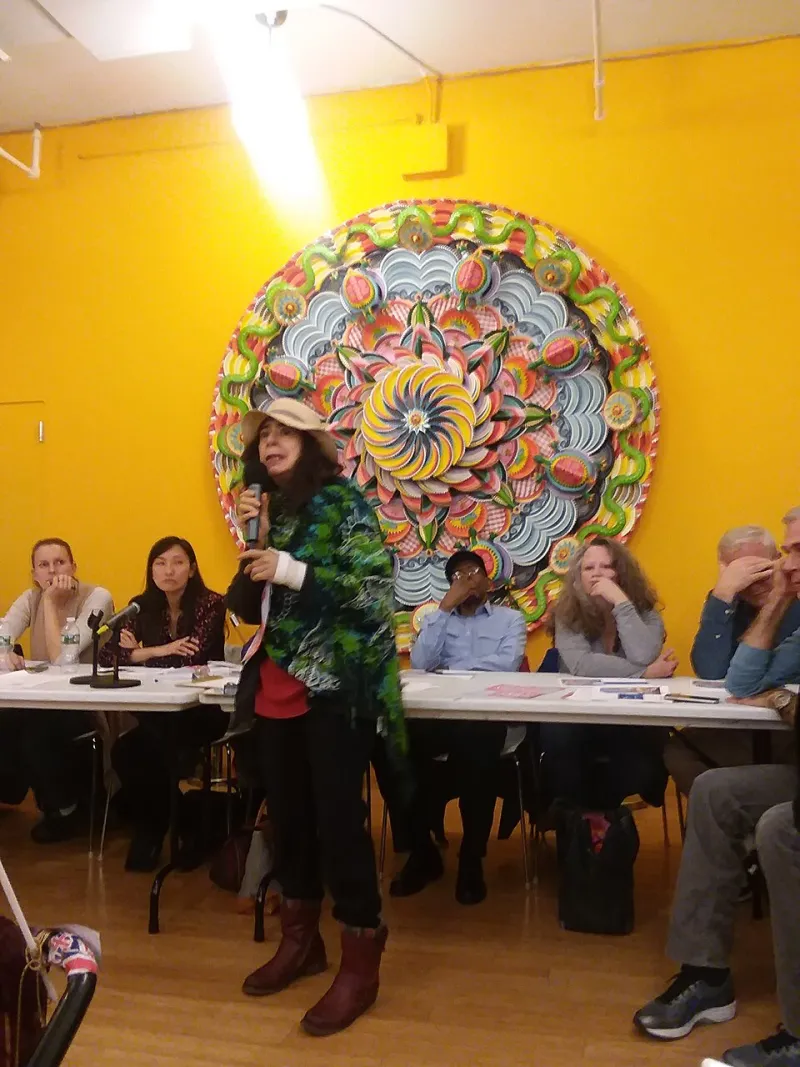
Photo: Greenwich Village Society for Historic Preservation, CC BY 2.0, via Wikimedia Commons
It is a story that plays out with uncomfortable regularity in neighborhoods across this city. A longtime resident steps outside one morning to find a construction crew breaking ground on a lot they assumed would remain a vacant green space. They call 311. They search the city's permit portal. Eventually, they learn that a zoning variance was approved weeks earlier at a hearing they never knew was scheduled. The project is legal. The deadline to object has passed. The community's opportunity for meaningful input has evaporated.
This is not an accident of bureaucracy. It is, in many cases, a predictable consequence of a system that technically satisfies public notice requirements while functionally ensuring that most residents remain uninformed until it is too late.
As your alderman, I believe that transparency in land use decisions is not a procedural courtesy—it is a democratic obligation. This article is an attempt to give you the knowledge to exercise that right.
What Is a Zoning Variance, and Why Does It Matter?
Every parcel of land in this city is assigned a zoning classification that governs what can be built on it, how tall structures can be, how far they must sit from property lines, and how much of the lot can be covered by impervious surface. These rules exist to protect neighborhood character, manage density, and ensure that development serves the broader community rather than exclusively the developer's bottom line.
A zoning variance is a formal exception to those rules. A developer or property owner applies to the city's Zoning Board of Appeals (ZBA) arguing that strict application of the code creates an undue hardship or that their project, despite deviating from standard requirements, is consistent with the spirit of the ordinance. A special-use permit, a related but distinct mechanism, allows a land use that is conditionally permitted in a zone—a drive-through restaurant in a commercial corridor, for instance, or a group home in a residential district—subject to specific conditions.
In theory, both processes include a public hearing at which community members can offer testimony. In practice, the gap between what is theoretically possible and what most residents actually experience is vast.
Where the System Breaks Down
Consider what happened on the 2400 block of our ward's western corridor two years ago. A developer sought a variance to construct a six-unit residential building on a lot zoned for single-family use. The required public notice—a small legal advertisement—ran once in a print publication with dwindling circulation. A notice was posted on the property itself, a laminated sheet on a stake that the wind had knocked flat within forty-eight hours. The hearing was held on a Tuesday morning.
Of the twelve property owners within the standard notification radius, only two received mailed notices in time. The variance was approved. Residents who learned about the project after the fact were told, correctly, that the hearing record was closed.
This is not an isolated incident. A review of ZBA filings from the past three years in our ward reveals that the median public hearing for a variance or special-use permit drew fewer than four public commenters. For comparison, a single ward office community meeting on the same topics routinely draws thirty to fifty residents. The difference is not apathy. It is awareness.
The notification system as currently structured—relying on newspaper legal notices, on-site postings, and mailed letters to a narrow radius of adjacent property owners—was designed for an era before digital communication and was never seriously updated to reflect how residents actually receive information today.
How Developers Leverage the Gap
Experienced development attorneys and land-use consultants understand the notification calendar intimately. Applications are often filed strategically: during holiday weeks when residents are distracted, in the late summer months when community organizations are less active, or with hearing dates scheduled for weekday mornings when working families cannot attend. None of this is illegal. All of it is deliberate.
Furthermore, the evidentiary standard at ZBA hearings tends to favor applicants who arrive with professional presentations—traffic studies, architectural renderings, engineering reports—against residents offering subjective concerns about neighborhood character. Without organizing in advance, community opposition frequently arrives underprepared and is dismissed as anecdotal.
What Residents Can Do Right Now
Monitor the pipeline proactively. The city's Department of Planning and Development publishes a weekly bulletin of pending zoning applications. This is public information, but it requires you to look for it. Our ward office distributes a monthly digest of active applications—if you are not already subscribed, contact us directly to be added to that list.
Show up early, not after the fact. The single most effective intervention a resident can make is submitting written testimony or appearing at a ZBA hearing before a vote is taken. Once a variance is granted, legal challenges are expensive, time-consuming, and rarely successful. The hearing is the leverage point.
Understand the legal standard. When testifying against a variance, generic statements that you dislike the project carry less weight than testimony that directly addresses the legal criteria the ZBA must apply. Those criteria typically include whether the applicant has demonstrated genuine hardship, whether the variance is consistent with the comprehensive plan, and whether it will materially harm adjacent property owners. Frame your comments accordingly.
Organize before the hearing, not during it. A dozen residents submitting coordinated, substantive written comments in advance of a hearing carries more procedural weight than the same residents speaking extemporaneously at the hearing itself. Our ward office can help facilitate that coordination.
Request aldermanic intervention. The alderman's office has standing to request continuances, ask for additional community meetings, and in some cases refer projects back to the community for broader input before a ZBA vote proceeds. This office has exercised that authority on multiple occasions in the past two years. But we can only act if we know a project is drawing community concern. Let us know early.
The Legislative Path Forward
Beyond individual project fights, this office is actively pursuing ordinance-level reforms to the notification process. Specifically, we are advocating for mandatory digital notification to all registered voters within a half-mile radius of any variance application, extended comment periods for projects exceeding a certain scale, and a requirement that pre-application community meetings be held for developments above a defined density threshold.
These are not radical proposals. Several peer cities have adopted comparable requirements. The resistance comes primarily from development industry lobbying groups that correctly understand that better-informed communities produce more organized opposition. That calculus, frankly, is exactly the argument for reform.
Your Ward, Your Voice
Zoning decisions shape the physical fabric of a neighborhood for generations. They determine whether a block remains walkable or becomes a cut-through corridor, whether affordable housing gets built or luxury units crowd out long-term residents, whether the corner lot becomes a community garden or a cell tower. These are not abstract policy questions. They are decisions about the place where you live.
The current system makes meaningful participation unnecessarily difficult. Until that changes at the legislative level, this office is committed to bridging the gap—through proactive notification, community education, and direct engagement with the ZBA process on behalf of residents who deserve a real seat at the table.
If you have received a notice about a pending zoning application in your area, or if you have questions about a development project you have observed in the ward, please contact our office directly. We are here to help you navigate this process before the window closes—not after.